
More premium supply makes selection harder, not easier
A corridor becomes more interesting when strong developers and larger projects arrive. It also becomes more competitive. SPR buyers now have to think about how multiple premium and luxury developments will coexist, which buyer profiles they target and how much similar inventory may be available at future resale.
That is why a broad “SPR will grow” thesis is too weak. The investor needs a project-level edge: disciplined entry, superior product, a credible developer, stronger access, lower density, better planning or a clearer future buyer. Without that edge, the investment becomes dependent on the entire corridor rising together.
Township scale can be an advantage and a risk
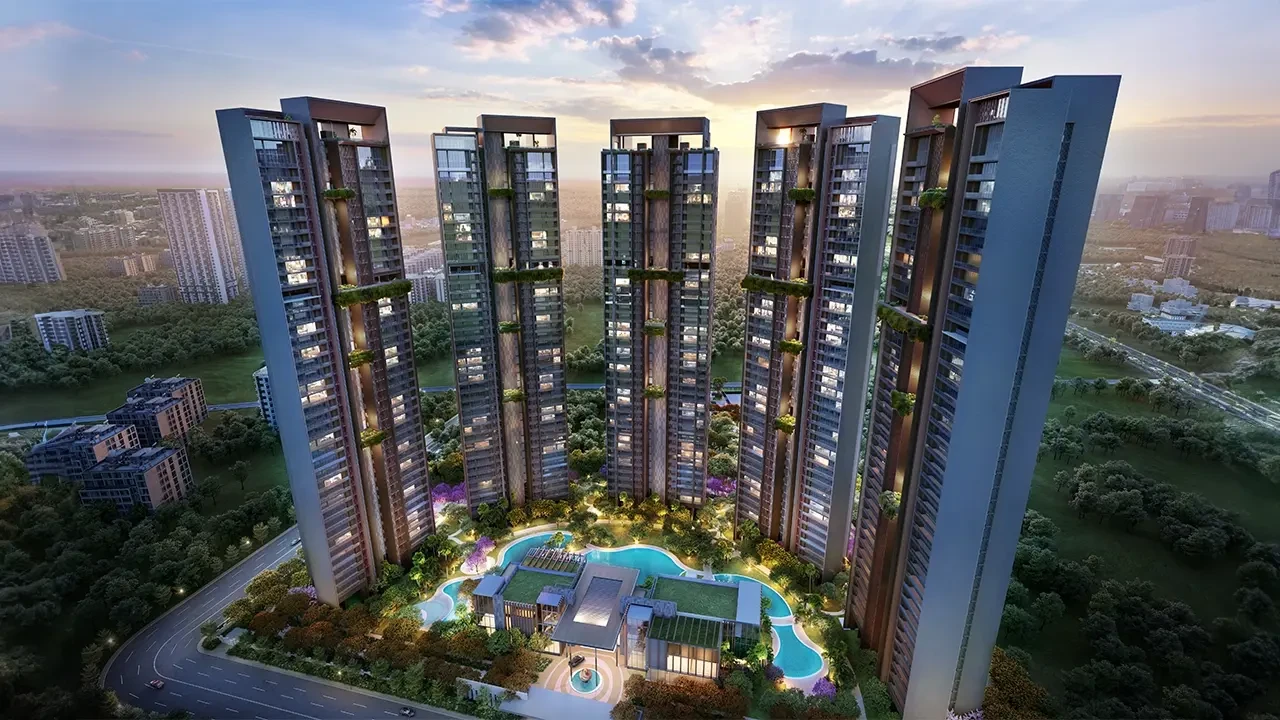
Large planned ecosystems can create amenities, landscaping and a stronger sense of destination. They can also introduce long phasing, multiple towers and substantial future inventory. Investors should understand where their phase sits within the broader development and what future supply may still be released.
For end-users, the same scale can be attractive if it creates a complete environment. The key is whether the delivered experience matches the promise and whether daily access works before every future component is complete.
Entry valuation should reflect execution stage
A project at an early stage, a project under active construction and a completed resale do not carry the same uncertainty. Investors should demand a reason for taking construction and timing risk. If a project is priced as though every future advantage is already certain, the risk-adjusted opportunity may be weaker.
Conversely, a well-executed project can become more valuable as uncertainty reduces. The investor’s job is to understand which risks they are being paid to take and which risks are simply being ignored.
The future SPR buyer needs to be specific
Who buys a premium SPR apartment five years from now? A family moving from an older Gurugram society? A professional seeking a newer home near employment corridors? An investor rotating from another sector? The answer matters because projects should be designed and priced for real future demand, not only launch demand.
A unit with practical planning, good access and a strong community can remain relevant even when new supply arrives. A generic unit in a dense competitive set may struggle to command attention.
Self-users should test the present, not only the master plan
SPR can be compelling for end-users, but the buyer should evaluate today’s access and surrounding convenience rather than relying entirely on future infrastructure. Drive the routes at actual commute times. Visit nearby retail, schools and services. Understand construction activity in the immediate area.
A home is lived in the present while the corridor matures. A buyer comfortable with that trade-off can benefit from newer product; a buyer who wants complete maturity today may prefer a more established location.
Build a peer set before you evaluate any SPR project
The most useful SPR comparison is not every project on the corridor. It is the small set of developments that compete for the same buyer at a similar ticket size. Group projects by client profile, configuration and delivery horizon. Then compare density, planning, access, developer execution, effective entry and future supply within that peer set.
This prevents a common mistake: using a very different project as a reference simply because its quoted rate makes the preferred purchase look attractive. A high-density premium project, a large-format DLF product and an ultra-luxury launch may all sit in the broader SPR ecosystem, but they do not necessarily compete for the same buyer. Peer discipline improves both valuation and negotiation because the alternatives are genuinely substitutable.
Monitor the thesis after purchase instead of freezing it at booking
An SPR investment should be reviewed as the project and corridor evolve. Construction progress, surrounding access, competing launches, resale asking patterns and the quality of the emerging end-user community can all strengthen or weaken the original thesis. The investor should not wait until the desired exit year to ask whether the assumptions are still valid.
A simple annual review can be enough: what has been delivered, what new supply has entered the peer set, how has the buyer profile changed, and would Assetwise still buy the same unit at the current market value? This creates an active ownership mindset. The objective is not frequent trading; it is avoiding the common mistake of holding an asset indefinitely because the original sales pitch is never revisited.
What would make us more constructive on a project
Confidence should increase when execution begins reducing uncertainty: construction advances visibly, access improves, promised landscape and amenity elements take physical form, the surrounding ecosystem becomes more usable and the project starts attracting genuine end-user interest. These are observable developments rather than marketing claims.
At the same time, Assetwise should track competing supply. A project becoming physically stronger can still face a weaker investment environment if numerous similar alternatives arrive at aggressive pricing. The best review combines the asset’s own progress with changes in the peer set. Looking only at one side can produce an incomplete conclusion.
The unit should survive a future comparison screen
Imagine a future buyer opening five completed SPR options on the same day. What makes the shortlisted unit survive that comparison? A better view, lower density, stronger planning, a more established community, a respected developer or a meaningfully better entry can all help. Generic luxury features will not be enough if every competing project offers them.
This mental exercise is useful because it moves the investor from launch scarcity to completed-market competition. The project must eventually win without the benefit of being new. If the unit has no obvious reason to stand out in that future comparison, the buyer should demand a stronger entry or reconsider the shortlist.
Build a real peer set of projects serving the same buyer, compare execution stage and future supply, and identify what makes the shortlisted unit defensible when more premium inventory is completed.
Frequently asked questions
Is SPR suitable for self-use?
Yes, depending on the project and the buyer’s daily routes. Present-day access and surrounding convenience should be tested.
Does more supply mean prices will fall?
Not necessarily. Supply must be considered together with demand and product differentiation. It does increase the importance of choosing a project with a clear future buyer.
Should I prefer a large township?
Only if the scale benefits match your needs and you are comfortable with phasing and future inventory.
What should investors compare on SPR?
Effective entry, construction stage, developer execution, density, future supply, unit quality and likely future buyer depth.
Return to the Assetwise Private Desk with your budget, objective and preferred corridor.
Speak to Assetwise →